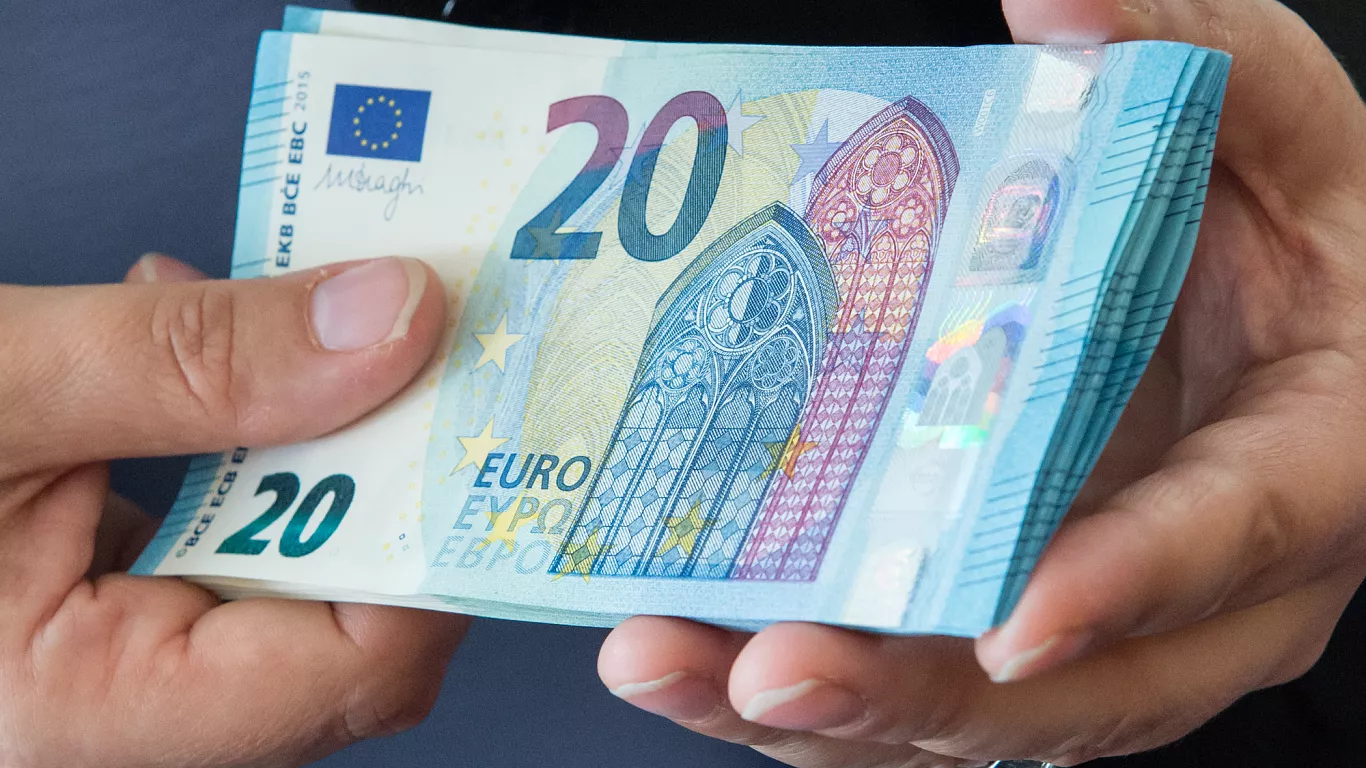
The minimum wage is still paid to millions of workers throughout the EU. Although the criteria have frequently failed to rise in line with inflation, they are meant to give workers a minimal quality of living. According to Eurostat, the monthly minimum salary before deductions across the EU as of July 2025 varied from €2,704 in Luxembourg to €551 in Bulgaria.
With a minimum wage of only €164, Ukraine has the lowest minimum pay among EU candidate nations. Italy, Denmark, Sweden, Austria, and Finland are the five EU nations without a national minimum wage.
There are notable variations in minimum salaries around Europe, as the following figure illustrates. Eurostat divides nations into three salary brackets.
A fourth category has been created by Euronews, which comprises EU candidate countries and grouping countries with minimum earnings under €600. Every nation in the top category pays a minimum salary of more than €2,000 per month, with the exception of France, which pays €1,802. In addition to Luxembourg, they include Germany (€2,161), Belgium (€2,112), the Netherlands (€2,246), and Ireland (€2,282).
Portugal (€1,015), Greece (€1,027), Poland (€1,100), Lithuania (€1,038), Spain (€1,381), Slovenia (€1,278), and Cyprus (€1,000) are all included in this category. A few of nations in the middle category are just above the €1,000 mark. A few of nations in the middle category are just above the €1,000 mark.
Also Read:
In Texas, a Deadly Measles Outbreak Does little to Dispel Vaccine Skepticism