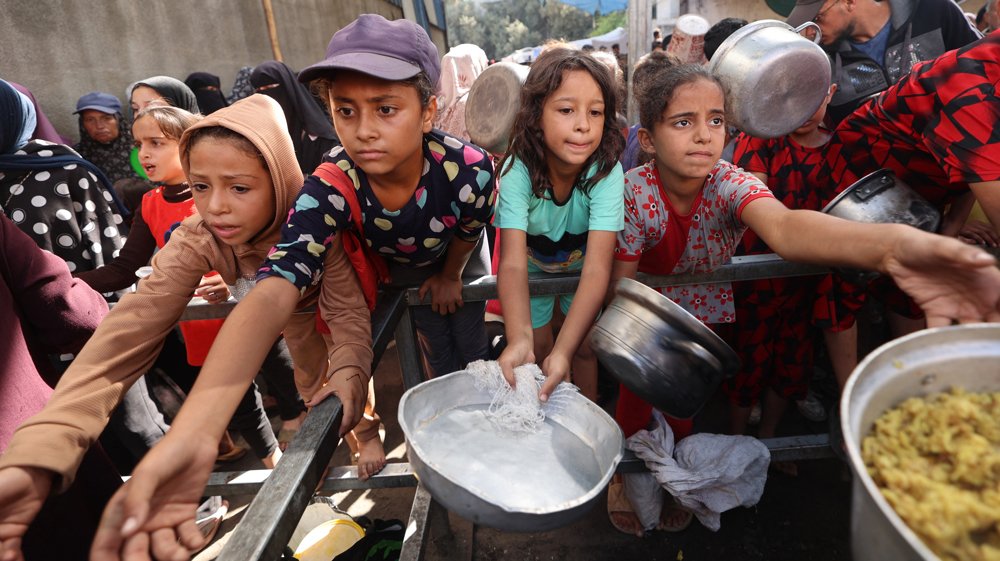
Garlic sizzles in massive metal pots set over open wood fires, stretching in a long line. Cooks toss in canned tomatoes, peppers, and handfuls of spices, stirring the bubbling sauce with oversized spoons. What they’re preparing is more than just a meal it’s a lifeline for thousands.
In the heart of central Gaza’s al-Zawayda, American Near East Refugee Aid (Anera) launched this community kitchen soon after the ceasefire began six weeks ago. The U.S.-based humanitarian organization also runs another kitchen in al-Mawasi, in southern Gaza, which the BBC visited in early May.
Back then, two months into an Israeli blockade that halted all food and goods from entering, supplies were running dangerously low. Now, with some food deliveries permitted again, conditions have improved. Each day, Anera serves freshly cooked meals to over 20,000 people.
We’ve expanded from 15 cooking pots to as many as 120 a day,” says team leader Sami Matar. “We’re now reaching more than 4,000 families across 30 camps of internally displaced people a big increase from just 900 families six months ago.
Also Read:
In Texas, a Deadly Measles Outbreak Does little to Dispel Vaccine Skepticism