Financing Ukraine’s military requirements and budget for 2026 and 2027 is a major issue for the European Union. The bloc will be forced to raise its financial support for Kyiv to at least €90 billion over the next two years since the United States is essentially no longer involved. However, how?
Leaders will present two distinct options when they convene on Thursday to reach a final decision. Plan A: use Russian assets that have been immobilized to provide a zero-interest reparations loan. Plan B is to jointly borrow the funds.
A senior diplomat stated, “It’s clear there are not really nice options on the table.” “All the options are costly, complex and difficult.” The emphasis is on Plan A, the reparations loan, as taking on collective debt necessitates unanimity, which would be nearly hard to accomplish at this point. However, the plan, which is unprecedented in contemporary history, has caused a significant rift among EU leaders.
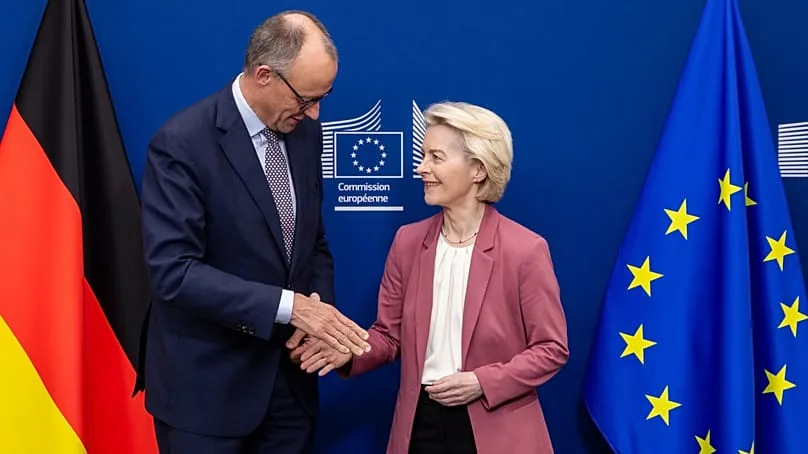
German Chancellor Friedrich Merz and European Commission President Ursula von der Leyen are two ardent supporters of the reparations loan. A few days later, Merz published an impassioned plea in an opinion piece in the Financial Times that caught other capitals off guard.
Also Read:
South Korea and The UK Reach a Trade Agreement
In Texas, a Deadly Measles Outbreak Does little to Dispel Vaccine Skepticism