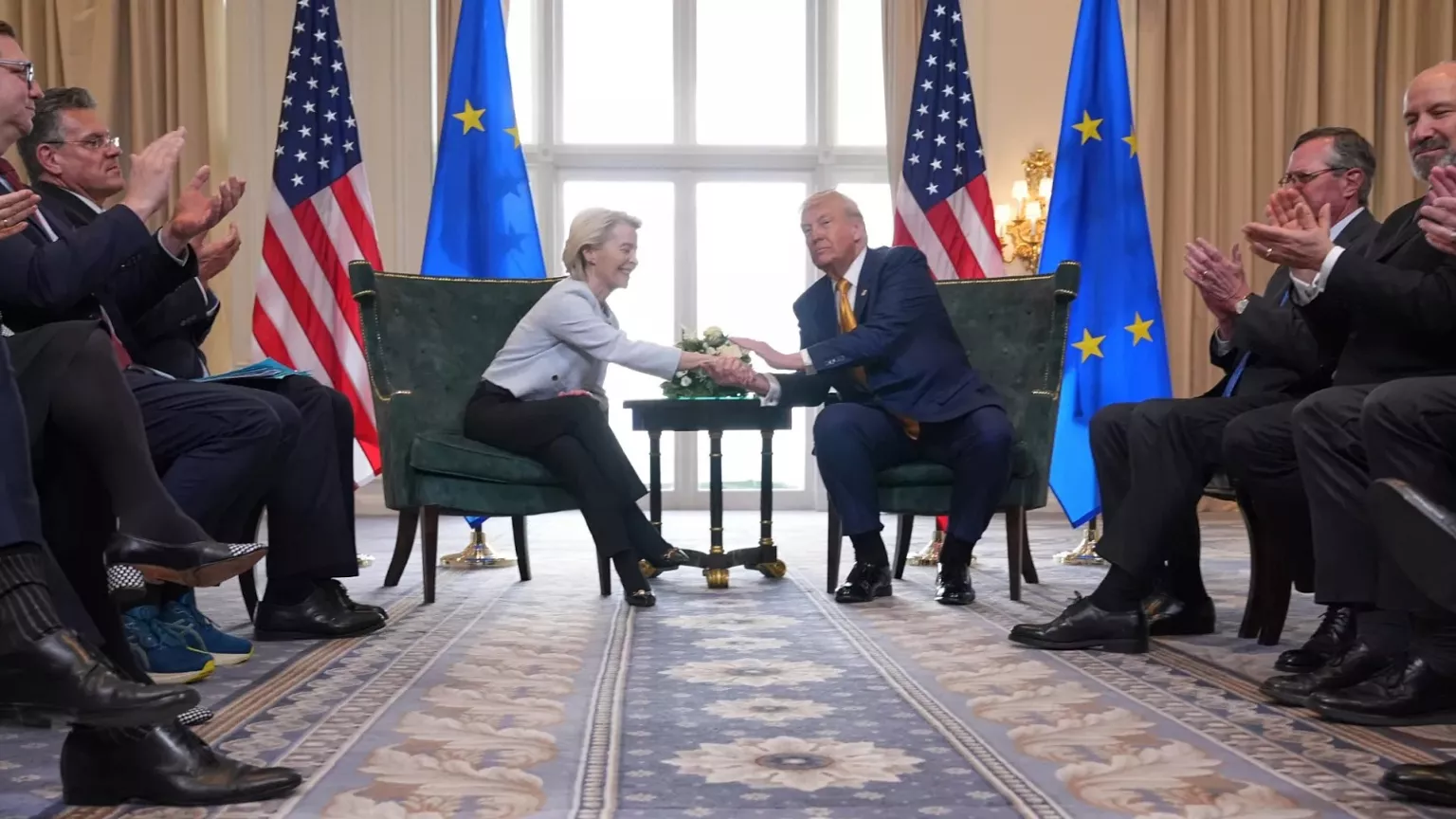
August saw a steep decline in Germany’s economic morale, ending a three-month upswing and raising fresh concerns about the prospects for the nation’s development. The drop comes after a contentious trade agreement between the US and the EU that has let financial analysts down and exposed important manufacturing sectors to higher tariffs.
In August, the ZEW Indicator of Economic Sentiment fell 18 points to 34.7, far less than the more moderate decline of 40 that was anticipated. This partially undoes the robust rebound that occurred in July, when sentiment reached its highest level since February 2022.
The decline is a result of worries over the apparent imbalance of the recently concluded transatlantic trade agreement as well as Germany’s poor second-quarter performance. The announced EU-US trade deal has disappointed financial market experts,” said Professor Achim Wambach, head of ZEW.
The ZEW index had a significant drop in August 2025, partly as a result of the German economy’s subpar second-quarter performance. Particularly for the chemical and pharmaceutical sectors, the situation has deteriorated. Additionally impacted are the metal and mechanical engineering industries, as well as the automobile sector.
Germany’s fall was reflected in sentiment throughout the eurozone. While the measure of present circumstances plummeted 7 points to minus 31.2, the bloc’s ZEW expectations index fell 11 points to 25.1.
Also Read:
In Texas, a Deadly Measles Outbreak Does little to Dispel Vaccine Skepticism