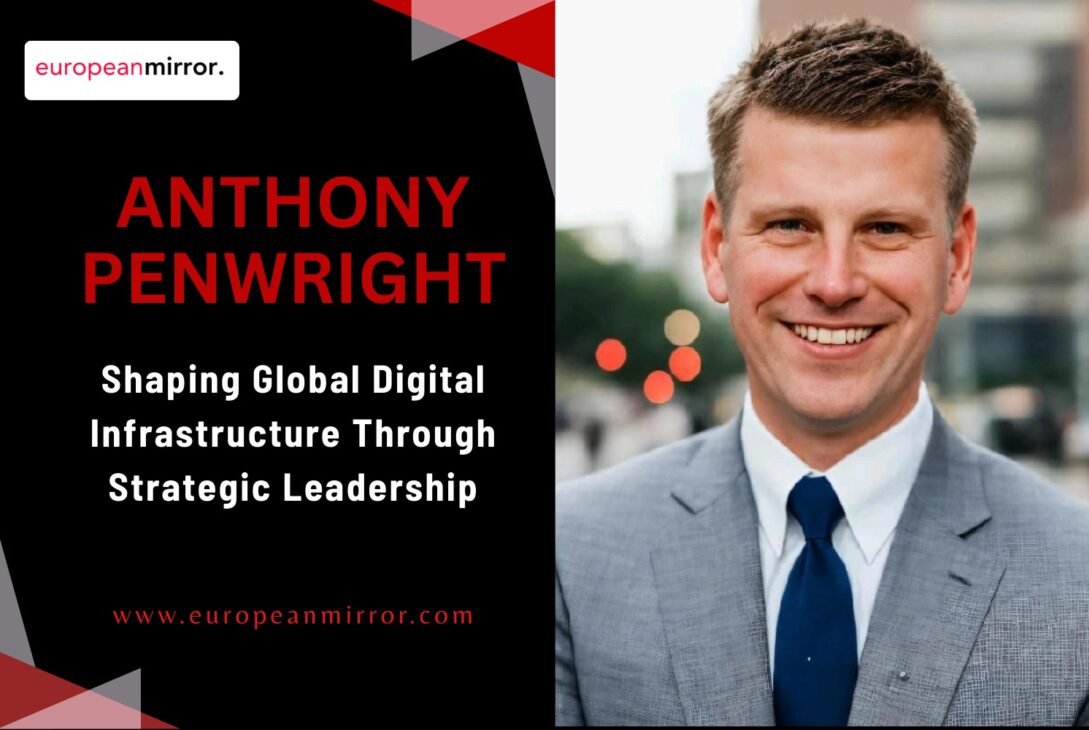
With a career spanning the UK Government, Cisco, Wipro, and NEOM, Anthony Penwright has established himself as a global authority in enterprise-scale digital transformation. Recognized for delivering complex programs valued at over £1BN, he blends governance discipline with technological foresight, leading initiatives across Smart Cities, Artificial Intelligence, IoT, and Blockchain.
Known for aligning large, cross-functional teams around measurable outcomes, Anthony brings a rare balance of strategic execution and empathetic leadership. His ability to bridge institutional rigor with human insight has positioned him at the forefront of transformative change in both public and private sector environments.
Today, as he continues to shape large-scale digital ecosystems while pursuing entrepreneurial ambitions, Anthony’s journey reflects a defining belief: that sustainable transformation is not driven by technology alone, but by leaders who understand that progress begins with people.
Institutional Foundations
To begin, we asked, “How did your professional journey begin, and what shaped your transition into technology leadership?”
Anthony reflected, “My career began in the Police Force. At that time, I was seeking stability after navigating personal challenges in my early life. While public service provided discipline and structure, I became increasingly drawn to the systems and technology enabling operations.
A senior mentor recognized my ability to connect people and technical frameworks. That encouragement led me to invest in professional IT qualifications. Over time, I transitioned into leading digital transformation programs across government and enterprise environments.”
He noted that this early shift laid the foundation for his long-term leadership approach.
Governance as Strategic Architecture
Given his experience in billion-pound transformation programs, we asked, “What distinguishes successful institutional transformation from unsuccessful efforts?”
He explained, “Transformation at scale is not primarily a technological challenge. It is a governance and alignment challenge.
In complex programs involving hundreds of stakeholders, structured accountability and measurable KPIs are essential. Clear ownership, transparent reporting, and defined strategic objectives build institutional trust. Without governance discipline, even well-funded initiatives can lose coherence.”
He emphasized that governance should be viewed as strategic architecture rather than administrative oversight.
Artificial Intelligence and Institutional Responsibility
Turning to the future, we asked, “How do you assess the long-term implications of Artificial Intelligence for enterprise and public sector institutions?”
Anthony responded, “AI adoption is accelerating structurally across sectors. It is influencing productivity, supply chains, operational workflows, and strategic planning.
However, institutions must address ethical responsibility, workforce adaptation, and regulatory alignment simultaneously. Leaders who succeed will combine technical literacy with structured change management and policy awareness.”
He added that he is currently completing an MBA in Artificial Intelligence to deepen his expertise in AI governance and enterprise integration.
Innovation Through Ecosystem Collaboration
We then explored innovation, asking, “How can organizations foster innovation while maintaining institutional rigor?”
He stated, “Innovation requires ecosystem thinking. It begins with defining genuine strategic problems rather than pursuing technology for its own sake.
Cross-border collaboration with accelerators, research institutions, venture capital networks, and technology providers strengthens innovation pipelines. Proof-of-concept frameworks validate commercial and operational viability before scaling.
Importantly, procurement and commercial models must evolve to support emerging innovators. Institutional agility is critical to remaining globally competitive.”
Leadership Across Multinational Contexts
Given his global experience, we asked, “How has leading across diverse geographies influenced your leadership style?”
Anthony reflected, “Diversity strengthens strategic decision-making. Leading across multinational contexts requires understanding different cultural frames of reference.
Empathy remains foundational. When individuals feel heard and understood, alignment improves significantly. Presence, accessibility, and accountability create long-term credibility.”
Vision Beyond Enterprise
As our conversation concluded, we asked about his future direction.
“I continue to value enterprise leadership within complex digital ecosystems. At the same time, I aspire to build something independently.
I am currently in the pre-seed phase of developing a validated product concept. My ambition is to create an organization where emotional intelligence, diversity, and disciplined execution define performance.”
Connect with Anthony Penwright on LinkedIn to gain industry insights.
Also Read:-
Christoph Guger Advancing Neurotechnology Through Scientific Integrity
Nicolas Baerfuss: A Digital Space for Growth, Balance, and Well-Being