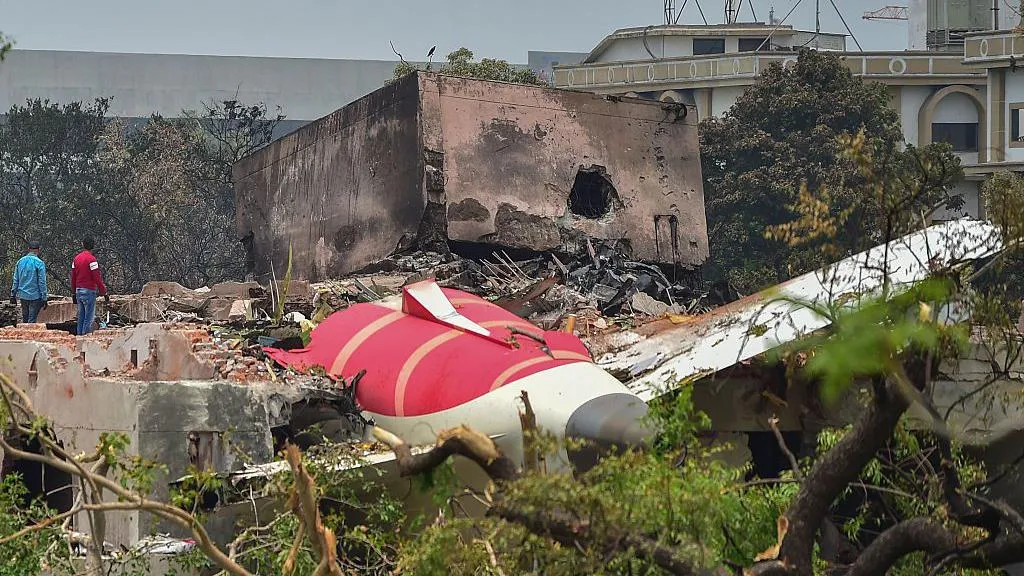
Many people anticipated that the preliminary report on the June tragedy of Air India Flight 171, which claimed 260 lives, would provide some closure. Instead, the 15-page study fueled a flurry of conjecture. Because one fact still haunts investigators, aviation analysts, and the general public despite the report’s measured tone.
The 12-year-old Boeing 787’s two fuel-control switches suddenly switched to “cut-off” seconds after takeoff, reducing fuel to the engines and resulting in complete power loss. Normally, this step is only performed after landing.
The automatic engine relight was activated when the switches were put back into their typical inflight positions. One engine had relit but had not yet recovered power, while the other was restoring thrust at the moment of the accident. After less than a minute in the air, the aircraft crashed into a neighborhood in Ahmedabad, a city in western India.
Since the preliminary study, a number of conjectural possibilities have surfaced; a complete report is anticipated in around a year. New details in the probe of last month’s Air India crash are shifting the focus to the senior pilot in the cockpit,” according to reports from the Wall Street Journal (WSJ) and the news agency Reuters.
Also Read:
In Texas, a Deadly Measles Outbreak Does little to Dispel Vaccine Skepticism