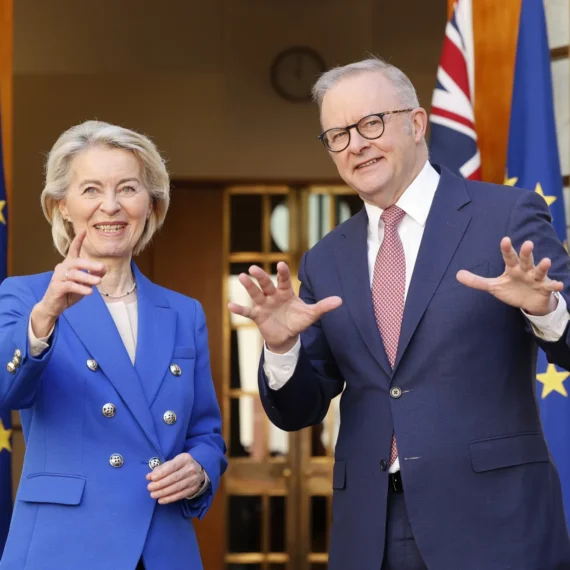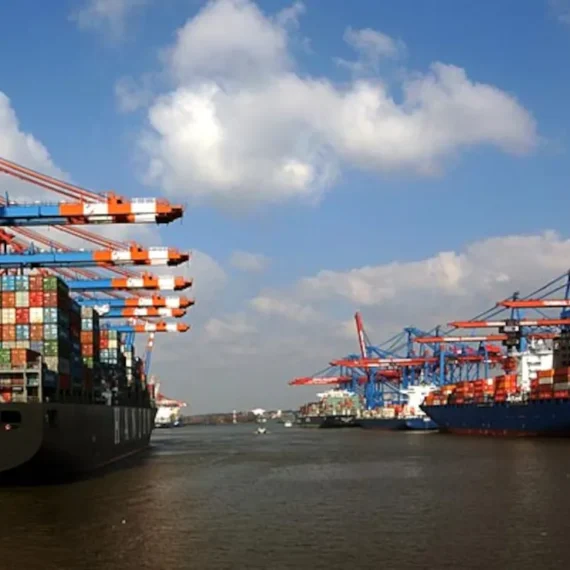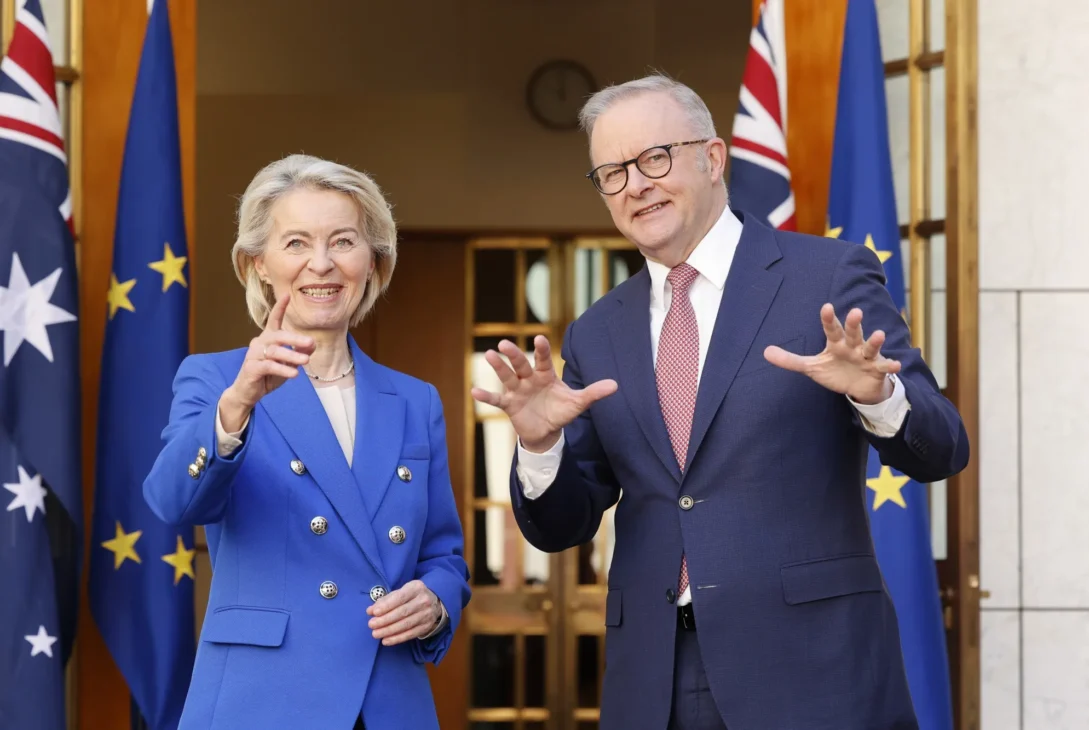
On Tuesday, European Commission President Ursula von der Leyen signed a free trade agreement with Australian Prime Minister Anthony Albanese. This cut tariffs on most EU goods and farm exports. Brussels has won again with this accord as it tries to diversify its trade relationships and secure key allies in a world that is becoming more tense.
The Commission said that the deal would save the EU €1 billion a year in duties and that exports may rise by as much as 33% over the following ten years. Farmers in the EU were already opposed the Mercosur trade pact, and MEPs were threatening to take it to court, which made agriculture a hot topic.
Over the course of three years, tariffs on cheese, wine, select fruits and vegetables, chocolate, and processed foods will go down to zero. Australia agreed to limits of 30,600 and 25,000 tons a year for beef and sheep, which were the most difficult problems that stopped talks in 2023.
If a lot of Australian goods hurt the EU’s market, a safeguard mechanism will let the EU protect key sectors. The deal gives access to Australia’s important raw minerals, including as aluminum, lithium, and manganese, in addition to agriculture.
Also Read:
Christoph Klein: Reimagining Sustainable Investment with ESG Portfolio Management
Dr. Akintoye Akindele: Empowering the Future of Africa through Investment and Leadership