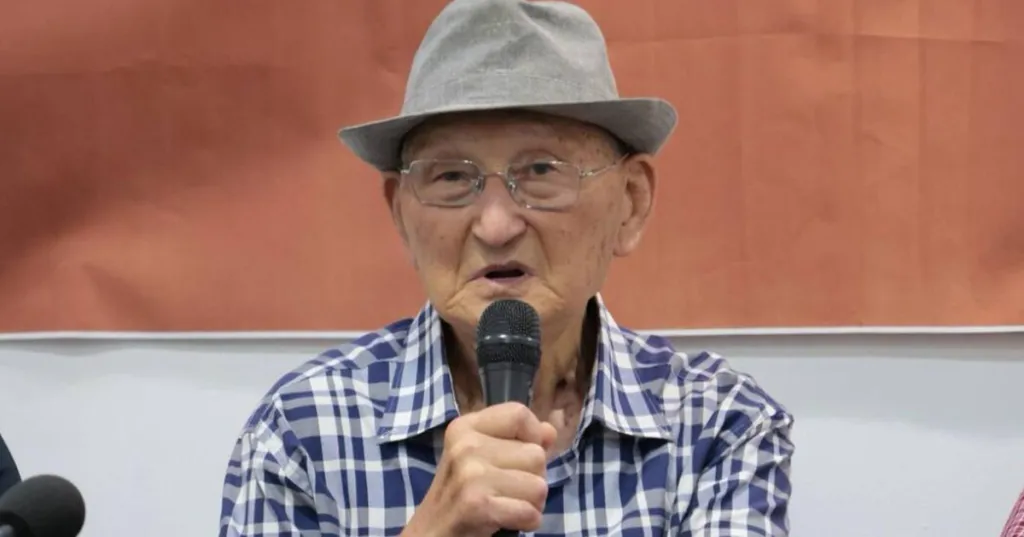
An exceptionally big throng had assembled outside Imjingang Station, the final stop on Seoul’s metropolitan subway line that is closest to North Korea, on a sweltering morning earlier this week. Dozens of police officers and activists were focused on one man: Ahn Hak-sop, a 95-year-old former North Korean prisoner of war who was traveling to the opposite side of the Korean peninsula’s border to return home.
As anticipated, the South Korean officials said they did not have enough time to complete the required arrangements, so he was turned away and never made it across.
He was unable to walk the thirty minutes from the station to the Unification Bridge, also known as Tongil Dae-gyo, one of the few routes that connect South Korea to the North, because to pulmonary oedema, a buildup of fluid on the lungs.
So, at 200 meters from the bridge, he got out of the automobile and walked the last distance on foot, supported by two supporters. He addressed the reporters and some 20 volunteers who had gathered in support after returning with a North Korean flag, which is an uncommon and quite startling sight in the South.
Also Read:
In Texas, a Deadly Measles Outbreak Does little to Dispel Vaccine Skepticism